

Intel maps out Optane’s future and says Penta Level Cell NAND is in the works - dickermanfrivelly
In a massive storage information dump, Intel laid come out its Optane roadmap and claimed an butt on in Penta Level Cell NAND technology. That's not even mentioning the caller's plans for fatter SSDs, you bet long it'll take to get persistent memory to consumer PCs.
The announcements were made Thursday good morning at a storage event in Seoul, South Korea, where Intel showed off several new engineering science coming perfect the freeway. Intel also proclaimed that, later on the very common and amicable disassociate from Micron, it's moving its Optane development to Rancho Rio, New United Mexican States.
Optane Roadmap: Barlow Slip by
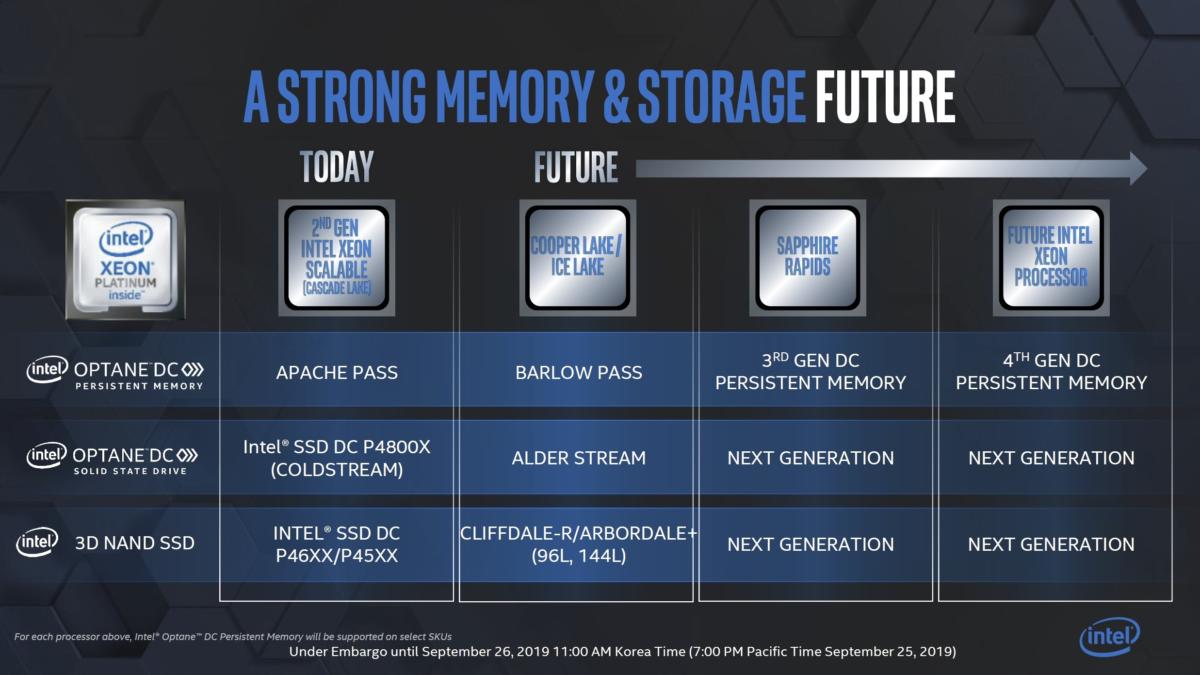
If you've had a hint that Intel's been closely aligning its storage efforts with its CPU efforts, that hint turned into a nudge on Thursday: Intel confirmed that its upcoming Cooper Lake and ICE Lake CPUs leave have support for its 2nd-generation Optane DC Persistent Memory board modules. Codenamed Barlow Pass along, the Optane modules wish be tight tied with the approaching Xeon CPUs. And yup, a yet unnamed, but rumored-to-be-called Crow Pass will be fastened with its upcoming Sapphire Rapids Xeon CPUs.
Intel's Optane DC Persistent Memory are high-density, superior, non-volatile remembering modules that cristal into DDR4 slots. Using proprietary methods, they reserve servers to pack in terabytes of not-volatile storage closely coupled to the CPU. For software vendors who have optimized for Optane DC Persistent Memory along with Optane SSDs, both carrying into action and toll savings potty be very significant, Intel same.
 Intel
Intel Intel confirmed that Barlow Pass will be tied to its Cooper Lake and Ice Lake Xeon products.
2nd-gen Optane SSD: Alder Stream goes unsatisfactory the foliate
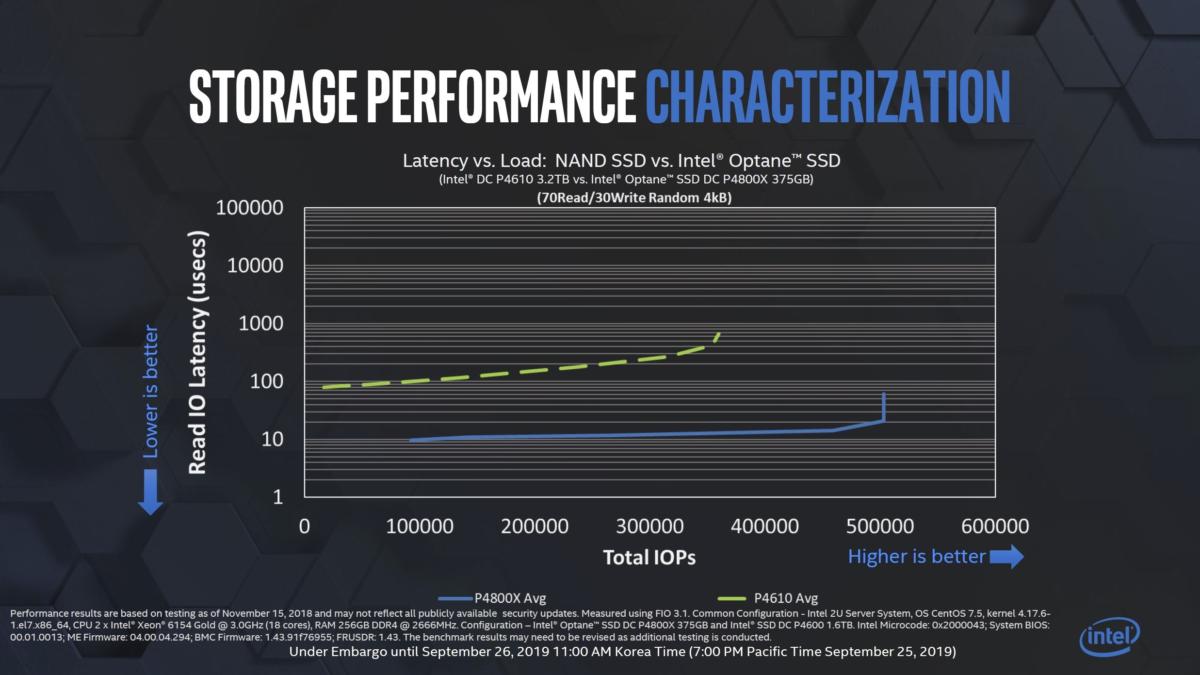
Intel's next-generation Optane will expand on the far side DC Persistent Modules to build Optane Direct current SSDs. Code-titled Alder Stream, Intel said the performance goes off the page.
 Intel
Intel Intel's current Optane-based P4800X demolishes traditional NAND-based SSDs in latency and IOPS.
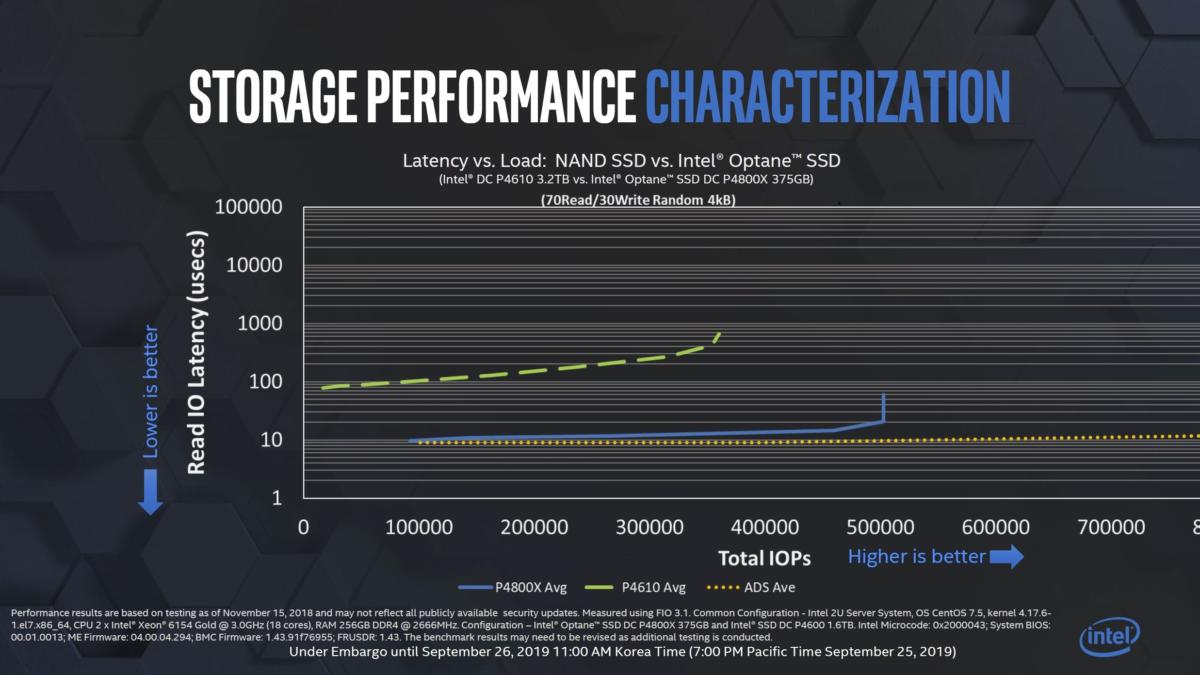
In the functioning claim above, Intel shows the prowess of its first-gen P4800X Optane DC SSD as it crying up an Intel D.C. P4610 NAND SSD. Optane's low latency performance has long been proven. Only if you view the next carrying out claim, you can come across how the next-gen Alder tree Stream rips in response time and IOP performance. Spell the 1st-gen P4800X runs out of steam in a higher place half a million IOPS, Alder Pelt seems virtually unstoppable.
 Intel
Intel Just the next-propagation Alder Teem literally goes off the page.
Intel: Our PLC NAND has an bound
With half the world's data being created in only the last two years alone, everyone will involve more space, Intel officials said. That substance our current QLC (Quad-Level Cell) SSDs won't cut it.
For that, Intel said IT's streaming ahead with plans for pentad-bits-per-jail cell NAND, or Penta-Level Cell (PLC). As the name implies, pentad bits means basketball team possible values for each electric cell, compared to the original Single Level Cell's single bit or Quad Level Cell's four bits per cell.
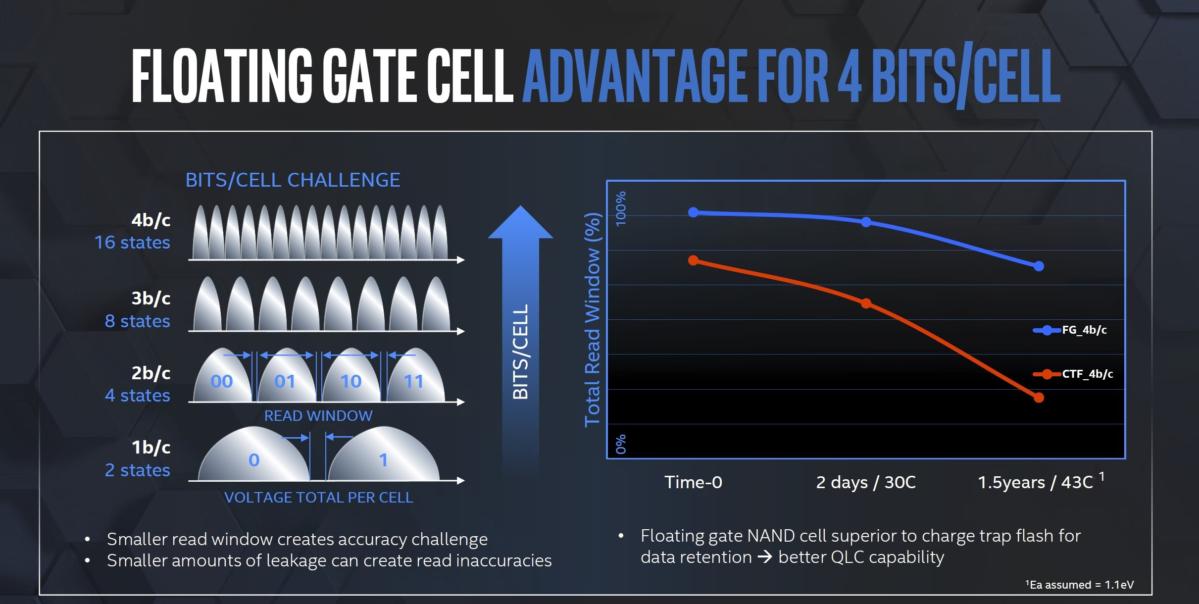
Intel's not exclusively: Toshiba aired its PLC plans last month. Intel, withal, same its NAND, built just about floating gates, should have an edge complete the far more coarse Shoot down Maw technique used away almost 3D NAND makers. Intel said the unsettled-gate cells offer larger and more reliable read Windows between each prison cell. That, successively, agency it's easier to gain tightness with vagabond-gate cells as QLC compactness increases, Intel officials said.
 Intel
Intel Intel said i vantage with its floating-gate approach is an growth in the read window between the cells which gives it to a greater extent reliability over time.
Intel says floating-logic gate cells will also aid its PLC designs. It's hard to confirm that, but reports have recommended that Micrometer burst from Intel because Micrometer wanting to rubbish dump floating gate for explosive charge trap.While nigh companies use charge trap designs today, Toshiba is apparently looking at floating gate for its PLC designs. We won't get any hard answers for a year or two.
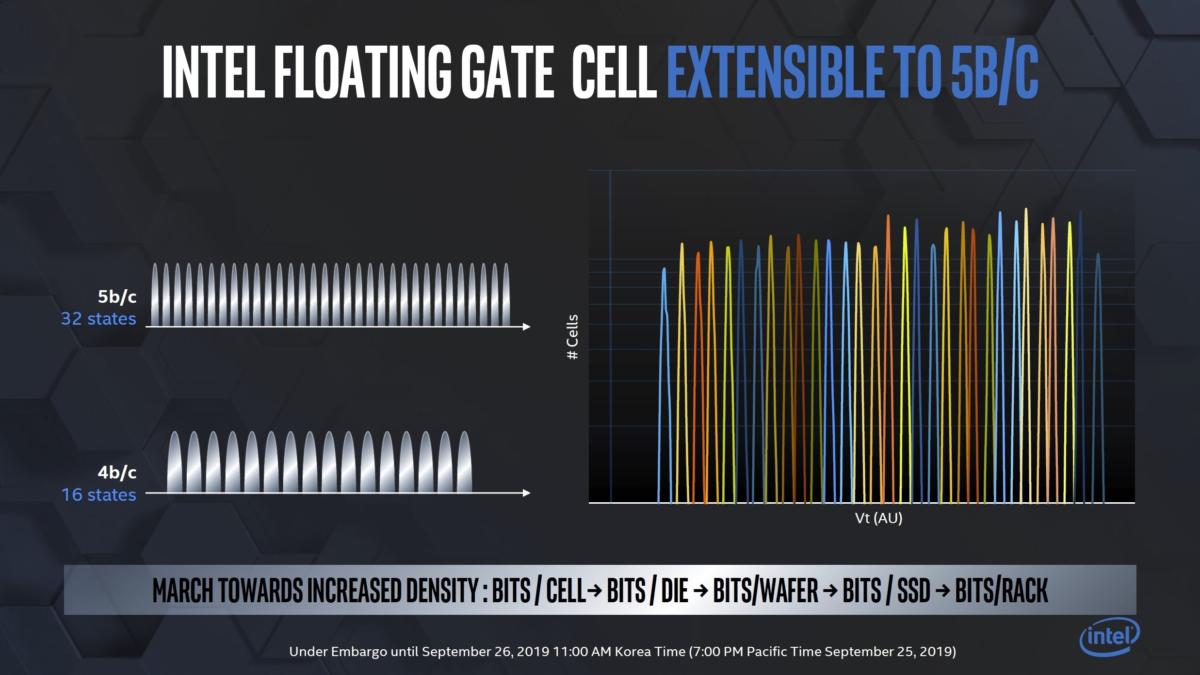 Intel
Intel Intel believes its floating gate cell approach gives it a leg up over bill trapping designs secondhand aside just well-nig everone else today.
Technology details aside, drive capacities are likely to get so much larger. Intel officials said the company wish introduce 96-layer QLC drives this year and 144-layer QLC drives next yr, initially for information revolve around drives.
Intel didn't harbinger any formal pricing or models, but if you flirt with today's 64-layer QLC drives such as the 1TB Intel 660P selling for $94 today on Amazon, you can imagine what a 96-layer operating theater 144-layer drive might eventually sell for.
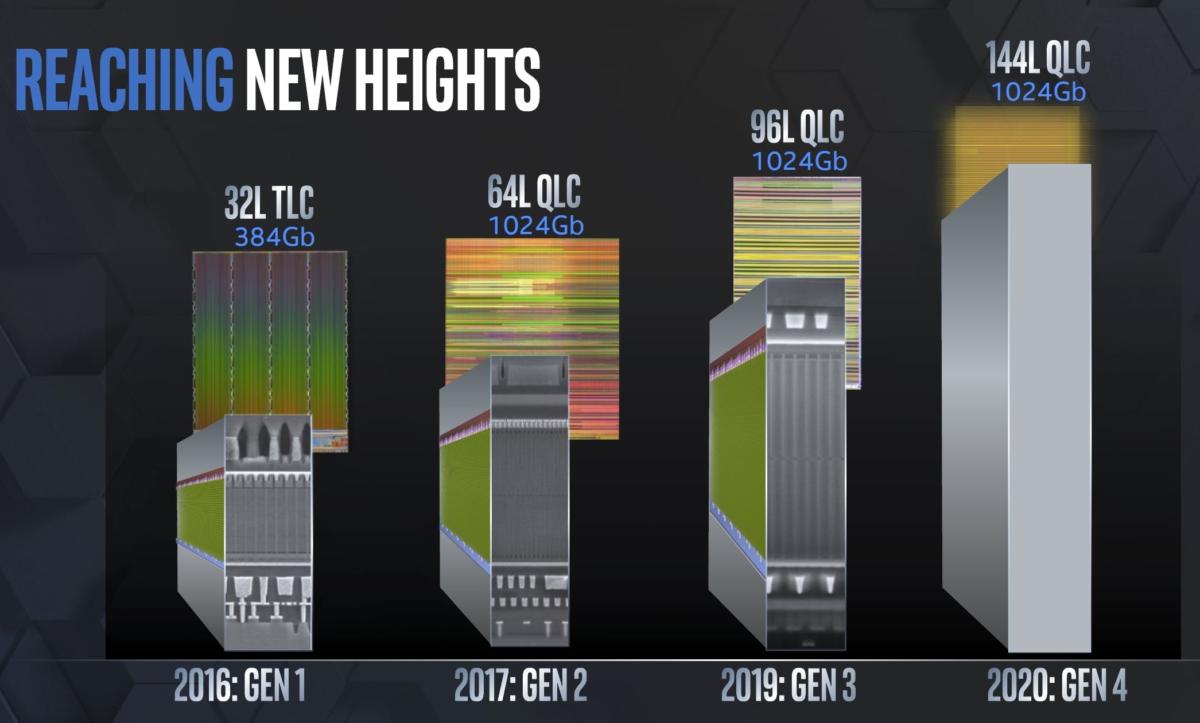 Intel
Intel Intel plans to introduce 96 layer QLC and 144 bed QLC drives by next twelvemonth.
Intel D.C. Haunting Store DIMMS: Non ready for consumers
The finally minute of news concerns Intel's plans to get those DIMM-supported Optane modules into consumers' hands. Today, it's express solely to data center applications, and information technology will soon make it in workstations.
Intel officials said the computer hardware is there, and there is already some support for DIMM-based Optane modules in Windows 10. However, the company believes it'll take at least other year or two in front applications and the OS can make full use of it.

Source: https://www.pcworld.com/article/398073/intel-announces-optane-roadmap-and-penta-level-cell-qlc-nand.html
Posted by: dickermanfrivelly.blogspot.com
0 Response to "Intel maps out Optane’s future and says Penta Level Cell NAND is in the works - dickermanfrivelly"
Post a Comment