

This future-proof speaker shows modular tech isn't dead
This time to come-proof speaker shows modular tech isn't dead
When we recall of tech's big failures in the by decade, information technology'south easiest to gawp at a select few. The doomed Google Glass. The detonating Samsung Galaxy Note seven. Juicero, though that was kind of funny.
But by holding attention on these twelve-automobile pile-ups, we can often overlook the smaller tragedies. And this week the Blindside & Olufsen Beosound Level reminded me of ane in particular: modular tech.
- Our picks of the best Bluetooth speakers
- The best smart speakers you tin buy
- Plus: Oppo could make the rear photographic camera disappear
The thought was sound. People could purchase a telephone, a PC or even a Television set and, instead of being stuck with the same hardware for the product's entire lifespan, could bandy in different modules to add functionality equally it was needed.
Modular mediocrity
The Motorola Moto Z family unit was a prime instance of the modular concept in activity: you could clip on Moto Mods like extended battery packs, stereo speakers for better music playback, and even a 360-degree photographic camera.
Then there was the Google Projection Ara telephone, in which almost every individual part could exist added or removed to a inexpensive fundamental skeleton. And who wouldn't want a smartphone they can practically blueprint and build themselves?
Very few, as it turns out. The Moto Mods concept kept trucking for a few years simply now mainly exists as a clearance sale. Even earlier that, Project Ara was put to sleep in the face of a lack of manufacturer back up and, frankly, an ugly, bulky design.
As well, the modular Acer Revo Build PC ended up every bit a atypical, standalone production rather than kicking off a aureate age of more hands upgradable PCs. More than recent modular attempts oasis't convinced, either — the Razer Tomahawk isn't significantly, structurally different from a PC you could build yourself. And Samsung's idea of users creating a huge TV from smaller MicroLED screens sounds toll-prohibitive at all-time.
A audio program
However, while the Beosound Level is as well a pricey piece of smart speaker, I call back it just might hold the pattern for a more successful accept on modular hardware. And, while it may audio counter-intuitive, I believe the secret lies in Bang & Olufsen keeping its ambitions minor.
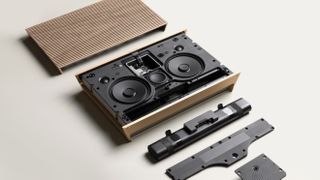
Run into, the Beosound Level's modularity comes not from slapping it with bulky add-ons, but by making it easier to replace what's already there. The battery, for example, can be replaced by the user: an extremely rare quality of rechargeable home speakers, but one that potentially extends the working life beyond more locked-downwards rivals.
Then at that place'due south the streaming module. Essentially all the Beosound Level's Bluetooth, Wi-Fi and point processing hardware is contained inside a distinct module that, when current wireless technologies become obsolete, can be swapped out for faster and more than reliable tech.
Since this enters the realm of future hypotheticals, you might call this frontward-thinking to a fault, but the logic makes sense. Bluetooth 5.0 and Wi-Fi half-dozen aren't going to be effectually forever, and if yous can take advantage of something better without needing to buy a whole new speaker, that's no bad thing.
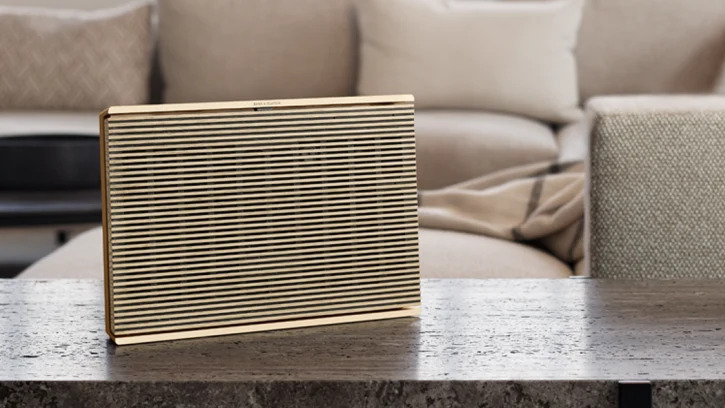
Merely what makes the Beosound Level a more encouraging example of modular tech than, say, Project Ara, is that it makes the product just repairable and upgradable enough to provide a clear practical benefit without condign downright alienating. Or, for that matter, even affecting the industrial design all that much.
Project Ara, with its chunky frame and multicolored chess lath of module slots, must take looked somewhere between "a hassle" and "terrifying" to any casual users who only wanted a new phone. Moto Mods, meanwhile, required you conduct effectually an arsenal of clip-on toys in addition to the handset itself. Suddenly the convenience of adding functionality doesn't seem so user-friendly.
The Beosound Level, by contrast, but looks and acts like a modern wireless speaker, and a very skillful-looking one at that. Unless you actively choose to engage with the nerdy upgrade/repair attribute, there's no sign that it even exists, even if it's ever at that place for those who desire to have reward.
This is why I'm glad modular hardware isn't entirely dead, and a sign of where I promise it moves in the futurity. Not as a hyper-technical platform that excludes non-geeks, nor for turning PCs into building block toys, just as pragmatic method of making the products nosotros buy stay useful for longer. And information technology'southward all cheers to a wooden speaker.

Source: https://www.tomsguide.com/opinion/how-bang-and-olufsens-future-proofed-speaker-shows-modular-tech-can-still-work
Posted by: dickermanfrivelly.blogspot.com
0 Response to "This future-proof speaker shows modular tech isn't dead"
Post a Comment